The shoulder seam is the first clue
Stand in front of a mirror in two plain t-shirts: one fitted, one oversized. The most important difference is not the chest width but where the shoulder seam sits. On a fitted tee, the seam rests on the bony point at the top of the arm. On a dropped-shoulder tee, it falls several centimetres down the upper arm. That single shift changes how the sleeve hangs, how the body widens and how the whole garment moves when you lift your arms.
A dropped shoulder tells the fabric to hang from the body instead of hugging it. The sleeve becomes a short tube that swings; the side seams move outward; the chest looks squarer. Designers working in streetwear often pair this with a shorter body length so the shirt reads as boxy rather than simply big. When you see a tee described as "boxy fit", look for that combination: wide body, dropped shoulder, hem landing around the hip bone.
Read the shoulder seam before the size label. It tells you what the garment was designed to do.
Length against width
Proportion is a ratio, not a measurement. A hoodie that is wide and long reads as a dress-like column; wide and cropped reads as a block; narrow and long reads as a 2000s-era slim layer. The 1990s baggy look associated with hip hop in New York and Los Angeles, and with denim labels such as JNCO, founded in Los Angeles in 1985, pushed both width and length to extremes. Later, labels influenced by Japanese pattern-making and by designers such as Rick Owens experimented with long, narrow tops over dropped-crotch trousers.
The ribbed hem matters here. A tight 2×2 rib at the waist pulls a loose body inward, creating a blouson effect where fabric puffs above the band. An open hem with no rib lets the fabric fall straight. Neither is right; each produces a different outline from an identical body pattern.
The trouser break and the stack
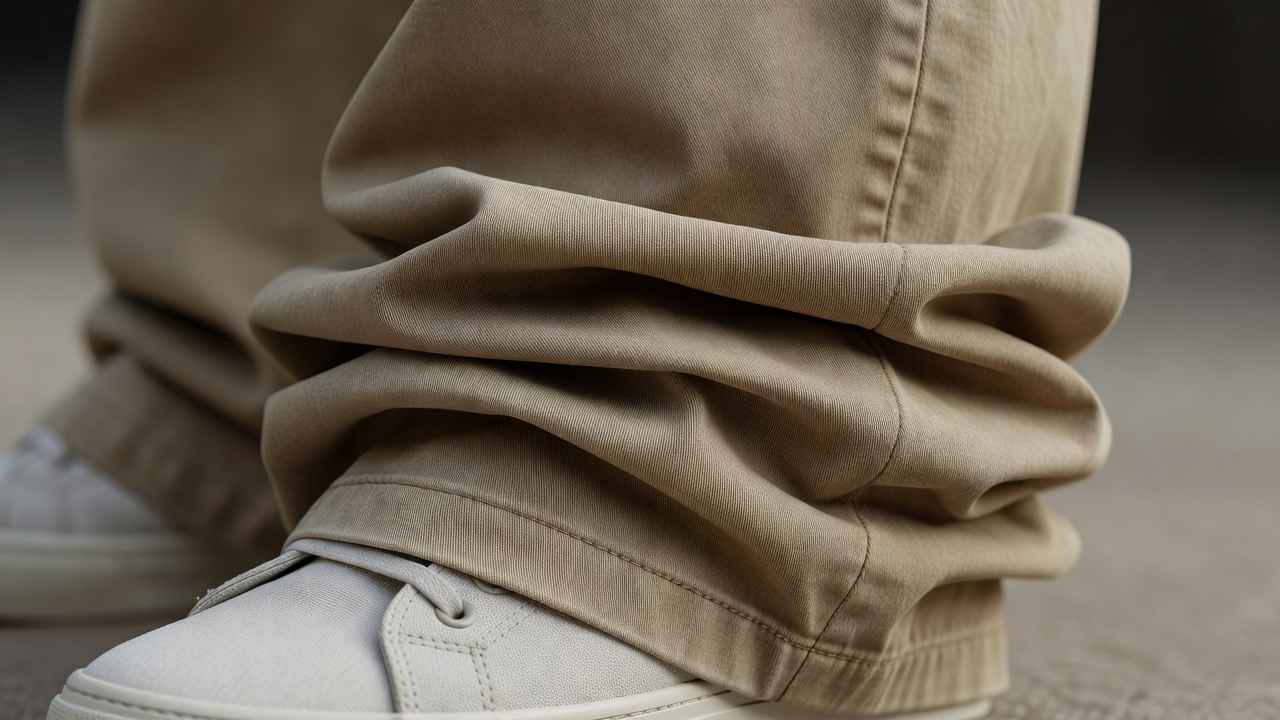
The "break" is the fold where a trouser hem meets the shoe. Tailoring tradition names a no break, a quarter break and a full break. Streetwear added the stack: deliberately excess length that concertinas above a sneaker, common with straight-leg selvedge jeans and with Dickies 874 work trousers, a style made by a company founded in Fort Worth, Texas, in 1922.
Stacking adds visual weight at the ankle, which balances a wide top. Cropped trousers do the opposite: they expose sock and shoe, shifting attention downward and making footwear part of the silhouette. If a top is large and the trouser is cropped and slim, the outline becomes a triangle balanced on a point. If both are wide and the trouser stacks, it becomes a column.
Layers change the edges
Layering in streetwear is less about warmth and more about edges. A hoodie worn under an unlined coach jacket lets the hood sit outside the collar and the ribbed cuffs peek out of the sleeves. A long tee under a cropped crewneck creates a visible band of contrasting fabric at the hips. Workwear pieces such as the chore coat or the Carhartt Detroit jacket, from a company that began in Detroit in 1889, became streetwear staples partly because their short, boxy bodies frame a hoodie neatly.
When you look at a layered outfit, follow the edges: where does each garment stop? Visible hems, cuffs and collars build horizontal lines across the body. Too many lines can chop the outline; one or two give it structure.
Outline table
| Garment detail | What to look for | Effect | Typical pairing |
|---|---|---|---|
| Dropped shoulder | Seam below shoulder point | Hanging sleeve, square chest | Straight or wide trouser |
| Cropped body | Hem at or above hip bone | Block shape, visible waistband | High-rise wide leg |
| Rib hem | Elastic knit band | Blouson puff above waist | Tapered or cuffed trouser |
| Full stack | Several folds above shoe | Heavy ankle, column effect | Chunky cupsole sneaker |
| Cropped trouser | Hem above ankle bone | Footwear becomes focal point | Visible ribbed sock |
Photograph yourself in the same top with three trousers. Ignore colour; trace the outer outline with a finger on the screen. You will see proportion more clearly than any size chart can show.
Shape sets the stage, but fabric decides whether that shape holds. Continue with Under the Printed Surface.