Two sole families
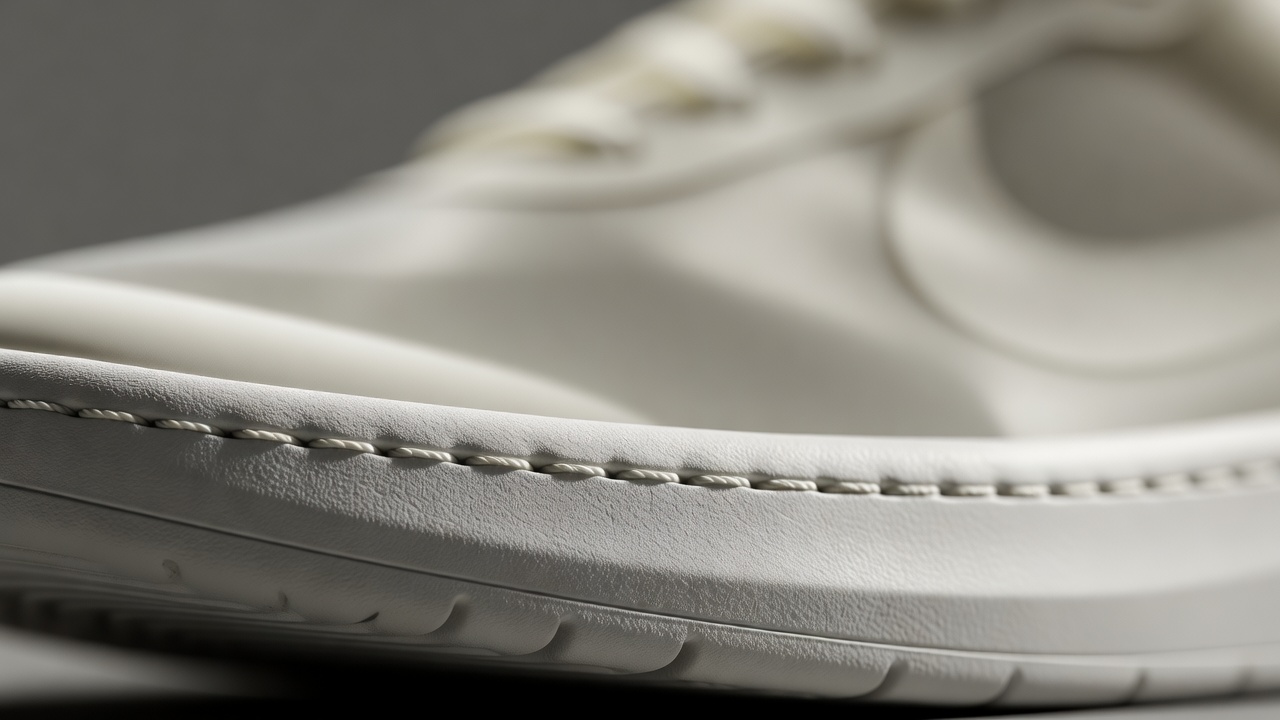
Look at the side of almost any streetwear sneaker and you will find one of two constructions. A cupsole is a pre-moulded rubber tray that the upper sits inside, often stitched through the sidewall. It is thick, supportive and heavy-looking. The Nike Air Force 1, released in 1982, and many basketball and court shoes use cupsoles. Because the sole has height and a visible edge, it holds its own against wide trousers.
A vulcanized sole is built by wrapping rubber around the upper, adding a strip of rubber tape called foxing, and curing the whole shoe with heat. The result is thin and flexible, giving skaters board feel. Converse's Chuck Taylor All Star and Vans models such as the Old Skool and Authentic are classic vulcanized shoes. Visually they are lighter, which suits slim or cropped trousers where the ankle shows.
A thin sole under a heavy trouser looks swallowed. A thick sole under a skinny trouser looks like a weight. Proportion runs all the way to the floor.
Boots and the welt
Streetwear also borrowed from work and subculture boots. The Timberland six-inch waterproof boot, introduced in 1973, became a New York winter staple and a hip hop signature in the 1990s, its wheat nubuck a recognisable colour. The Dr. Martens 1460, named after its launch date of 1 April 1960, travelled from factory floors to punk, ska and later streetwear. Its yellow welt stitch, where the upper is sewn to a strip attached to the sole, is a visible sign of a construction that can be more robust than glued alternatives.
When you inspect a boot, look for a stitched welt line around the edge of the sole. Visible stitching usually means a sturdier build; a smooth, seamless join often means cement construction, which is lighter and cheaper but harder to resole.
Caps frame the face
The New Era 59FIFTY, introduced in 1954, is a fitted cap with a structured six-panel crown and a flat brim, the official on-field cap of Major League Baseball for decades. Wearing it with the brim flat and the sticker on became a streetwear habit. A soft unstructured "dad cap" with a curved brim reads very differently: lower, casual, quieter. Kangol's bucket hats and berets, linked with artists such as LL Cool J in the 1980s, add another vocabulary entirely.
Caps change proportion because they add height or width at the top of the outline. A structured cap visually balances a wide jacket; a beanie compresses the head and makes oversized layers look larger still.
Socks, bags and hardware
When trousers are cropped or shorts are worn, socks become a panel of colour and texture. Ribbed athletic crew socks, often white with stripes, reference basketball and tennis kits. Bags have moved from backpacks to compact crossbody and shoulder bags, which sit high on the torso and add a diagonal strap line across a plain tee. That diagonal breaks up a boxy shape the way a belt breaks up a dress.
Hardware tells you about quality: metal snap hooks, moulded plastic side-release buckles and sturdy zip pulls survive daily use better than thin stamped parts. Nylon webbing with tight, even weave will not fray quickly at the edges.
Accessory comparison rows
| Object | Construction clue | Visual weight | Pairs well with | Care note |
|---|---|---|---|---|
| Cupsole court sneaker | Stitched rubber sidewall | Heavy | Wide or stacked trousers | Clean midsole with mild soap |
| Vulcanized canvas shoe | Foxing tape, thin sole | Light | Slim, cropped or rolled trousers | Hand wash; avoid high heat |
| Welted leather boot | Visible welt stitch | Heavy | Straight denim, work trousers | Condition leather, can be resoled |
| Structured fitted cap | Buckram-backed front panels | Medium-high | Boxy jackets, hoodies | Spot clean to keep shape |
| Crossbody bag | Webbing strap, side-release buckle | Low | Plain tees, coach jackets | Check stitching at strap joins |
Swap only your shoes in three photographs of the same outfit. The garments stay identical, yet the outline and mood change each time. That is the last ten per cent at work.
Questions about any of this? Visit Ask Beyond the Look or go back to the start with Where the Outline Lands.